Disclaimer: This is not for kids. It’s for adults who think about weird shit all the time or some of the time, or occasionally… either way, not for kids. There’s a lot of swearing. And it ain’t for hate-addicts or trolls either. If you’re just here to chill and listen to some weird shenanigans, well stick around mates.
Also, Heads up, Transcripts are auto-generated and can come off fucked up or just plain wrong. They’re usually alright, but sometimes they’re so bad they have to be skipped.
NEW EPISODE EVER THURSDAY EVENING
Host & Co.:Jess Gilley, Ashley Stolitza & Chris Miller
The ShortMerc (00:25)
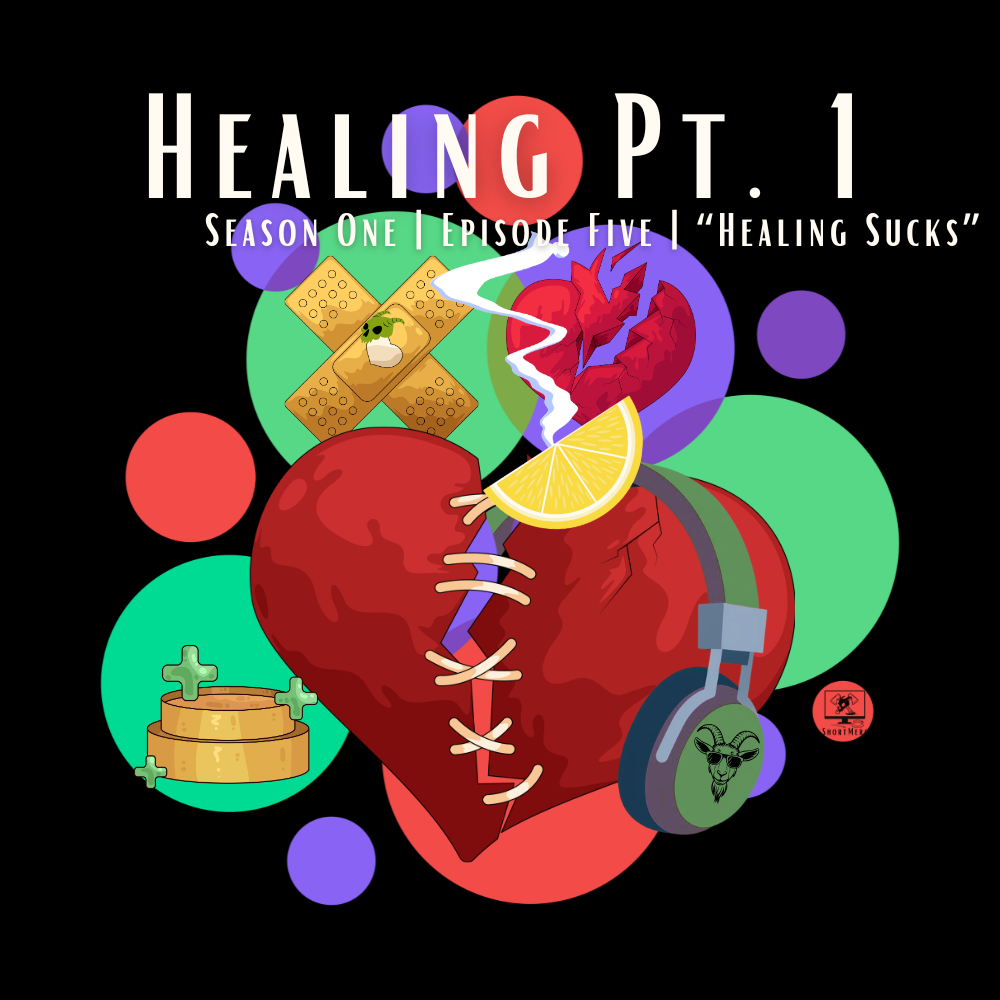
Anyway, no, perfection doesn’t exist in this place. We’re gonna talk about healing that perfection,
Ashley (00:32)
What I look at my segue, you’re welcome.
The ShortMerc (00:34)
⁓ And we’re already recording what
Chris (00:40)
imagine
Ashley on one of those segue machines.
Ashley (00:44)
Bye.
The ShortMerc (00:45)
Blair just kind of chilling. Got Metallica Blair.
Ashley (00:47)
calling.
Chris (00:47)
I feel like you’d be really good
at that. I don’t know why.
The ShortMerc (00:50)
Can we give you a little like ticket book and everything?
Ashley (00:54)
I won’t be able to hold a ticket book and write a segue. I could barely write a segue.
The ShortMerc (00:58)
We’ll put a little platform on the front like those stands we use in music class. Just pop it up there and you can have your little ticket book and then when people are just being little shits to themselves you’re like, hey, self care and then write them a ticket.
Chris (01:10)
Take it.
Ashley (01:10)
All right. We’re with that.
The ShortMerc (01:11)
I think that’s
where we’re going. We’re entering the healing era with Ashley’s ticketing segue. Healing does suck. Healing is garbage. ⁓ Yeah.
Chris (01:15)
healing.
and how it sucks.
Ashley (01:20)
Yup.
Chris (01:25)
You know my favorite
part about healing that sucks the most? That’s also not my most favorite part? Is like… you figured that was sarcasm? Good job!
The ShortMerc (01:28)
Bye.
I figured
I figured facetiousness was being held here.
I figured that was good.
Chris (01:39)
No, it’s
like knowing about it.
The ShortMerc (01:43)
Yeah.
Ashley (01:43)
No, no. Being aware of it.
Chris (01:46)
Because then you’re like, now I got to do something about it. Boo.
The ShortMerc (01:47)
Yeah.
Yeah, yeah, no.
Ignorance is bliss until it’s not. then people are like, they live in this weird proposed ignorant state where they’re like, no, if I just ignore it, it’s like, no, now you’re just going to feel guilty. You see how you didn’t need to feel like that? You could have just dealt with it and been done with it. I mean, I feel like healing, healing hurts too. And it makes you crazy. like I remember I got triggered at one of my last jobs and I was pissed. Like I was.
I didn’t. Instead the body broke down crying and instead of losing our shit I decided I was going to have a conversation with it and go, so are we actually crying here? What’s going on? Because we’ve already broken the seal. The whole audience knows we have tears running down our face and we’re a step away from needing a Kleenex for the lawnmower in the middle of it so if you wouldn’t mind what are we doing here? I feel like that wouldn’t have been possible unless we started the…
Chris (02:41)
You
The ShortMerc (02:45)
healing train going.
Chris (02:47)
Right, catching that thing that you’re afraid of that you don’t know how to deal with before you unconsciously act on it, right?
The ShortMerc (02:55)
Yeah. Yeah, or even consciously act on it. Because I mean, sometimes I feel like we we get to that point of hoping, hoping that healing is going to be super easy. And then we get there. Yeah. And like fluffy pillows and, you know, the perfect backchair that doesn’t make your lower lumbar just scream at you after an hour like.
Chris (03:06)
Nice, yeah. Like rainbows.
Ashley (03:08)
Mm-hmm.
The ShortMerc (03:17)
That’s what we thought healing was gonna be. Instead, no, the healing is the brace that makes your back scream for 16 hours every day until it resets. That is… It sucks. It is that.
Chris (03:30)
interesting that that like I guess would we think of healing differently if we weren’t sold the image of the like happy healing because
The ShortMerc (03:42)
I
Explain happy healing.
Chris (03:46)
Well, like the
healing that you think is all sunshine and rainbows and it’s going to make you feel good, you know, like obviously like it’s it’s good on the other end and you’re definitely a little bit more worn and it’s kind like battle worn in a sense. And the healing is not necessarily a lightness, but a ⁓ solidification of your persona.
Right? It’s like, who do you want to be after this stupid shit that you’ve gone through? And like, how are you acting because of it and how do you want to act because of it and just moving through all those things that stood in the way for you, from you acting that way when it first started happening. Does that make sense? That was kind of…
The ShortMerc (04:32)
think so.
I got yelled at by my charge for it, I think I got a little distracted in there. But no, I think what you’re saying makes sense, but I’m totally going to divert to Ashley to see what she says about it.
Ashley (04:39)
Thank
I mean, I think there’s the, I agree with you that there’s like a sense I think people have of pretty healing. think I know what you mean by that. And yeah, because not to keep going back to therapy, but I guess that’s what I do. ⁓ I think in therapy, right? Yeah, people think that you’re going to be healed like immediately or.
Chris (04:54)
Hmm.
The ShortMerc (05:03)
Only 16 hours a day.
Ashley (05:10)
you’re going to get back to normal, whatever normal is, or you’re going to like, like, I think there are a lot of clients that go into therapy and like in the third session, maybe quit or get frustrated because they’re like, but I’m not better. And that’s, you kid, that healing is a journey and you’re going to probably come out looking differently on the other side too. Like you’re not going to be the same to your point. You’re not going to be the same person that you were. You’re going to have those, like those cracks and those scars and those.
those ⁓ calluses and I think, yeah, I think that people probably if they weren’t sold that image of the perfect healing or the pretty healing or the easy healing, yeah, I think naturally we would be better at it, but like we wouldn’t hate it as much. We wouldn’t fight it as much.
Chris (05:59)
It’s almost as if like, what the healing does is takes those, those cracks and, and scratches and bruises that you were talking about and brings them out. It’s like you’re either dealing with them on the inside or you’ve dealt with them and they show on the outside kind of thing.
The ShortMerc (05:59)
But.
Yeah.
Yeah,
Ashley (06:14)
Mm-hmm.
The ShortMerc (06:14)
I
mean, it’s very similar to actual physical healing. Your body, when it’s healing something, inflames to, you know, neuralize, centralize, make sure that area is cut off from everything else. And then it goes on about its work. It takes way too much of your energy. It has to replicate cells, destroy cells, move new cells. Like, it’s insane. I know, I know, but surprise.
Chris (06:40)
This bleeds into
into parallels.
The ShortMerc (06:43)
I we’ve been bleeding all over the place, so I think one of us might need to learn how to tie
Ashley (06:44)
Thank ⁓
The ShortMerc (06:49)
a tourniquet here soon.
Chris (06:51)
I
feel like Ashley knows how to do that. I don’t know why.
Ashley (06:56)
What, tagging
The ShortMerc (06:56)
Yeah
Ashley (06:56)
together? that what she said? Oh. No, only an emotional turn a kid. Oh, thanks.
Chris (06:58)
A tourniquet.
The ShortMerc (06:59)
Yeah,
Ashley’s got mad skills.
Chris (07:04)
Okay.
The ShortMerc (07:05)
Yeah, I feel like I feel like it is a lot the same and to your point of not being afraid of it or not hating it as much I think and I’m gonna totally tout martial arts for little kids for a second But I think that’s where martial arts and fighting arts and combative or arts where you’re get hit even sports Are you gonna get hit are really important? ⁓
It’s not saying to go out looking for the fight, but it does teach your body not to be afraid of the pain, not to be afraid of getting hit because it learns I can fix this. You know, it’s like this isn’t the end all be all. This is a sensation that I’m having and it’s teaching me to maybe find a different way, explore a different way. know, ⁓ yeah. Mad skills, you know, but.
Chris (07:30)
you
Yeah.
Ashley (07:46)
⁓
Thank
The ShortMerc (07:52)
I think if people were confronted with what healing was from the beginning without all the mad capitalist marketing ploys, I see sometimes when I’m watching TV people are healing and it literally looks like Easter threw up all over the damn place. I’m like, for somebody like me who’s gone through the wringer, that kind of healing just seems like a farce. It seems like a waste of time. ⁓ I want the dark Batman gritty brooding. I need to
Chris (07:57)
Yeah.
The ShortMerc (08:22)
reset my legs and my spine type healing. ⁓ Because to me that’s the one that gets you where you need to go. From what I’ve experienced in myself and other people. So I think to your point, if we would just rip the bandaid off of healing, let people see that, you know, if you, you, if you confront it, it’s a little bit easier to.
to get there. mean, it’s not pleasant. It’s like going to the bathroom in the middle of a video game. Nobody wants to do it. Nobody wants to that pause button, but you got to pee, man. Yeah, or you just obliterate all the enemies. So really, it just becomes a conversation with how much discomfort you can handle at the time.
Chris (08:52)
seriously, sometimes you just gotta finish the level though, come on.
Ashley (08:53)
Thank
Chris (09:03)
Yeah, my generation were that we did really good because there were a lot of games you couldn’t pause. Or save.
The ShortMerc (09:07)
Yeah, we’re
Ashley (09:09)
Yeah, same.
The ShortMerc (09:11)
very similar there and we could pause them and or save them later in life, but you had to go spend, you know, like 20 bucks on a memory card that only had 128 megabytes on it. Nope, nope.
Ashley (09:21)
Mm-hmm.
Chris (09:21)
Yeah, and it wasn’t the same game. No, you’re
like, I’m starting from level four? That doesn’t feel right.
The ShortMerc (09:27)
No,
no, it wasn’t like when you got to Bowser’s Castle and you finally got there after like three hours of being fucking infuriated and then you get there and you get blown the fuck up and lose all your lives and have to start over. Exactly. Right, and then you get angry and then you kind of like heal your demeanor and go back into it because you have to win that level. You have to.
Chris (09:38)
destroyed. Like, that fireball wasn’t supposed to be there.
Ashley (09:40)
yeah ⁓
Chris (09:44)
Sorry, princess.
But then you get
really good at level one.
Ashley (09:52)
Yeah.
The ShortMerc (09:54)
You do get really good. then it
even like even that conflict becomes a source of comfort. Like it’s you get really, really good at it. And you’re like, oh, yeah, see, I can still totally do this. Yeah. Exactly, exactly. It’s like it’s like a scar that’s actually doing its job.
Chris (10:01)
Yeah, that’s true.
got that expectation but you can still always get a little bit better at it.
That’s kind of cool to think about in like the mastery sense in that you’re not after mastery, but you’re after like level nine and on the way to level nine, you keep mastering level one.
The ShortMerc (10:25)
Yeah, cause you keep fucking up. Like some people would say, you know, you’re failing. I know, I know, bleeding again. But some people would say you’re failing, but you’re really just learning. And when I say like you’re healing your demeanor, it’s like, I don’t know about you guys, but I get fucking pissed when I’ve been doing something. And then all of a sudden the game will like crap out. Fallout is notorious for this. I like to build very large and elaborate settlements where I completely ignore the build limits because I have problems.
Ashley (10:26)
No.
Chris (10:28)
Bye.
.
The ShortMerc (10:53)
and I know it’s gonna crap out on me, but then it does, and then I have to go back and rebuild it, and I don’t remember where I was or anything like that, and it was the same way with Mario, like you’re going through it and you’re angry. Like I’m angry at this point, but then it’s like, you know what? No, I can use my tools, I can use my coping mechanisms and skills, I know how to bring this back down to a level where I’m in control, and then you go back at it. It’s kind of like you master, you master a little piece of yourself when you master the…
the B questline in your games and such.
Ashley (11:24)
You know, it also makes me in this metaphor, it makes me think about how others impact our healing one way or the other, because like, I would, when you were talking about saving games and like games from back in the day, I remember playing my N64 and it was right, it had all the cords and it’s like out, you know, you have it out from the TV and then somebody’s walking and they trip and then they unplug everything and you’re like, just like, what the, or if it’s your parent, you can’t necessarily scream at them depending on your lifestyle.
Chris (11:41)
The tripping yeah
The ShortMerc (11:49)
Okay.
Chris (11:51)
And then you
have to heal because you couldn’t scream
The ShortMerc (11:54)
Yep. Yeah. Then you go talk to your therapist
Ashley (11:55)
Yes, exactly. Yes.
The ShortMerc (11:57)
about it. 20 years later.
Ashley (11:58)
Right. But like even games like, yeah, but like even games now, like, you know, people you can’t pause them like I was playing Fallout 76. I’m like, you can’t pause Fallout 76. And if somebody were to tell me that I had to like stop playing my game in the middle of a thing, and I’m gonna lose all this stuff, like, I want to be really upset. But I think of that with healing because you I think sometimes people go often people
but they swing in one direction or the other, So when they’re healing, sometimes people are like, well, I am gonna cut out toxic people. But it’s like, are those other people toxic? Or are you struggling to communicate the way that you need help or what you’re working on? And so then there’s this give and take with the other person maybe or people that it’s like, need to, needs, and it’s not easy, but there needs to be communication to say like, hey, I need.
like, hey, watch out for the wires, don’t trip because I’m playing this and I’m gonna really obsessed. Or, ⁓ you know, hey, like I can’t pause right now, but I’ll pause in five minutes. Like, so that communication part of feeling and then also recognizing the opposite that like sometimes, yeah, there are people in your life that are just gonna be like, yeah, well, fuck you and like unplug the thing. so you have to make that, exactly. So it’s like to make that distinction I think is important and difficult.
The ShortMerc (13:08)
Yeah, and then you rearrange the dental work.
Right. Yeah, and I think to your point too, it takes a lot when it comes to healing that you’re gonna have to learn yourself. ⁓ And that is the shit side of healing. ⁓ It shows you the ugliest parts of you, I think. At least it’s done that to me quite a bit. And it’s like, you can either choose to ignore this and it can become a larger problem, something you’re gonna have to heal more of later, or…
Ashley (13:33)
Mm-hmm.
Chris (13:42)
Probably physically.
The ShortMerc (13:43)
Yes, definitely physically. My PTSD
Ashley (13:46)
Yeah
The ShortMerc (13:47)
and I have something to say about that. ⁓
Chris (13:50)
it up.
The ShortMerc (13:51)
No, that’s one of those things where it’s just like, okay, listen, I need to know where my limits are. Like I remember getting concussions. I remember, you know, disjointing shoulders, having my chest cracked, all this stuff. And one thing it showed me is, okay, so where’s your pain threshold? Because this is all gonna have to heal. So we need to know where your pain threshold is. And then being ⁓ allergic to every painkiller under the sun, it’s like, from a physical standpoint, that really does something to you mentally where you start looking
Chris (14:07)
Hmm.
Mm-hmm.
The ShortMerc (14:21)
to learn patience and you have to learn to just observe a little bit and and recalibrate and that is the shitty part of healing if you if you ask my opinion
Chris (14:33)
Something I got stuck in for the past few years is like ⁓ the belief that I had to keep healing to like get stuck in the process of healing and looking for things that were wrong because I didn’t want to look at the like the easy thing to look at that I was avoiding because it was the hardest thing to deal with.
The ShortMerc (14:53)
Right, yeah.
Ashley (14:54)
I know.
The ShortMerc (14:55)
when you just do you kind of get addicted to that healing feeling a little bit. ⁓
but you end up tearing yourself open just so that you have something to heal and it’s like, well, you know, could take that same energy and build something else, but that along with the shitty side of healing is recalibrating. I think that’s where your physical therapy comes into play. If you’re a physical therapist or somebody who’s had to go to PT for whatever reason, you know, be it a condition or an injury or what have you, but that’s where you have to relearn how to do life with your new lessons that you’ve learned because
Chris (15:09)
Yeah.
The ShortMerc (15:30)
of healing because you ripped something open or broke something or it fell apart or it just malfunctioned and I think I think if we would set people up for that kind of success like understanding the fact that you’re gonna have to get there we would do a lot better as a society we’d do a lot better as a ⁓ an existence feature of being human like that’s just
Chris (15:40)
Yeah. Yeah.
Ashley (15:41)
Be sure to
Chris (15:51)
I noticed that…
Sorry, I didn’t mean to interrupt you.
The ShortMerc (15:55)
I you’re
good. It’s just I’m rehashing just do the thing
Chris (15:58)
I noticed that ⁓ a few years ago that there was a huge…
gap in between the work being done and the integration of the work and that there’s not a lot of support out there to like help someone take the energy that they just got back and devote it into something that is healthy so that it doesn’t default back into their old habits. There’s very, very, very little of that out there. You know, like you go to a weekend retreat and it’s like great and it’s yoga and it’s great and you learn so much about yourself and then in a year you got to
to to the yoga tree again. And of course that’s going to happen and you’re going to need to reflect on other things. But a lot of times those lessons don’t get to get a chance to sink in and really create the habits that the lessons want to create in your life. And I feel like that’s like a really blind spot for a lot of people that no one knows that that’s a step.
The ShortMerc (16:55)
Yeah, I mean, I’d have to agree. And Ashley, I’m sure you’ve probably seen a lot of this.
Ashley (17:01)
Yeah, I think there’s there. I agree completely. And I think there’s I think it goes twofold. Like I think in therapy, I think sometimes that therapists are taught like we need to immediately find like look for the look for the problem, fix the problem and move on without using the word fix. But ⁓ and then like, you know, well, and that’s what you have to do. And then you add in the societal barriers of like insurance or self pay. And it’s like, well,
You know, I have to justify the service. I have to justify that this person needs help and really like a lot of sessions or maintenance sessions or, you know, like ongoing growth sessions, but insurance companies are like, well, why are you still working on this? You’ve been working on it for a year and and we found ways to like, work through it and work around it. And ⁓ and I think there’s a little little more leniency there, but.
But yeah, then I think there’s an expectation from the therapist side where there’s like this imposter syndrome of am I doing it right? Because I’m still helping them on the same thing, but like, to your point, like you have to, it takes a lot of time. It’s not a quick fix. And there’s lapses too. So I liken it to like addiction. if somebody is in recovery from addiction, they’re not gonna have lapses. ⁓
Chris (18:00)
Yeah.
Ashley (18:18)
they might have relapses, know, a is a more shorter term, like quicker, like I had a drink or I drank for a couple of days and then I, you know, I, I’m sober again, or they might have full blown relapses, but that doesn’t mean that they failed. It just means that they learned something about themselves on that journey. So I think it applies to any type of healing.
Chris (18:37)
the other thing that’s interesting about it is that the person who’s going to help you start on the healing journey is typically not the person who’s going to help you finish it. And I don’t think anyone really knows about that. They think they’re going to go to a therapist, they’re going to get fixed and their life is going to get better. But I had a hard time dealing with that, working with people and realizing that I do not work well with the people who don’t know.
Ashley (18:52)
Mm-hmm.
Chris (19:00)
a certain to a certain level. I work really well with someone who knows kind of like they’re stuck and they want to get somewhere, but they just can’t find the path. And it’s a very, very small window in that healing journey that people go through. And it’s tough because if I is if me as a provider has a trouble realizing where I belong in like the helping aspect, then how do clients really have a chance if that’s not something that we talk about?
Ashley (19:10)
Okay.
I agree.
The ShortMerc (19:29)
Yep.
Yeah, I’d have to agree with you on that one too. And I think, to your point, like you might start off with a therapist and then you might end up going to a wellness guru. you know, sometimes on there are rare occasions with a person who helped you start the healing does help you finish it off. But I mean, that’s a really unconventional method of going through it. ⁓ But you might be that middle person who likes to help people heal in that regard. you know, you actually you might just even if a client doesn’t come back to see you, you might just be like that person
who gets them thinking about it and then they go, okay, well let me go do some research, do some ⁓ exploration, huff it a little bit, see what’s going on over there. Maybe, like the example, maybe, yeah, exactly, exactly. And then maybe Chris, you help them get unstuck, I know, yeah, nurturing the seed and I know there comes a point where I come in with my tools and my hose and shit and I’m like, all right, it’s time to re-
Ashley (20:13)
planting the seed.
Chris (20:15)
I heard them.
water in the sea or something. Yeah.
It’s called this bledgehammer.
The ShortMerc (20:28)
Yeah, yeah, pretty
Ashley (20:30)
Yeah.
The ShortMerc (20:31)
much because we’re now harvesting concrete fruit that we need but I’m that person who at the end of a lot of people’s healing dirty or where they’re ready to you know close a chapter and move on to the next one they they need somebody to be like hey get your shit together let’s go you got this like let’s go let’s go
Chris (20:49)
It’s like you gathered all the tools.
I know that’s what you talked to me all about and probably Ashley too. It’s like you spent decades collecting the tools. Like you have enough tools. You don’t need more tools. You don’t need to hoard any more stuff. You just need to actually like go out and use that.
Ashley (21:02)
was very nice.
The ShortMerc (21:08)
Yeah, and get going because
Ashley (21:09)
Mm-hmm.
The ShortMerc (21:11)
if you don’t it just becomes it just becomes reactive scar tissue. Yeah, and nobody wants that. mean scar tissue is not a good thing when there’s too much of it. Like and I think that’s that’s one thing too that if we could avoid the pretty healing lie a little bit and let people know like there are stages you are going to go through this with different people and different things are going to happen and it’s going to fucking hurt.
Chris (21:14)
Stag, yeah, stagnant. Yeah.
Yeah.
Ashley (21:36)
Mm-hmm.
The ShortMerc (21:37)
It’s
gonna hurt, you’re gonna be better for it, but you’ve been prepping for this your whole life. That’s the thing, is you’ve been prepping your whole life, whether you know it or not.
Chris (21:43)
Yeah, that I think that’s important
and no one really knows that like the way I like to describe it is
You have 20 years of experience to deal with the thing you didn’t get to deal with 20 years ago. you’re ⁓ a bigger, stronger person with more tools now. It might feel like it’s hurting more than it is, but it’s just because you didn’t know how to deal with it before. And again, I keep saying this, but there’s so many blind spots to this subject. And I think that people get a misconception
The ShortMerc (21:57)
Right.
Ashley (21:58)
Mm-hmm.
Chris (22:20)
either like it’s this wonderful, beautiful flowing guru healing or like it’s this trudge of a journey of darkness. And even though we can say healing sucks, I think we even do it a little bit of a disservice by saying that because it’s awesome and it’s hard and the hard part of it sucks, but it’s also not as hard as we typically make it out to be.
Ashley (22:25)
Thanks
The ShortMerc (22:44)
Mm-hmm.
Yeah, that’s… So I’m glad you went there, because that’s another thing I was gonna bring up, is it’s not this fucking giant tree full of this crazy stuff that’s gonna give you everything you want in this magical, huge, audacious, theatrical manner. It’s healing… Healing can be just something as simple as, you know what, maybe today I’m gonna take an extra five minutes to just sit outside and let my…
Chris (23:14)
Take a breath. Yeah.
The ShortMerc (23:14)
my system just relax for a second,
Ashley (23:15)
Mm-hmm.
The ShortMerc (23:17)
you know, or maybe healing is, yeah, I want to have these conversations, but I don’t know where to start. So maybe I’m just going to accept that I don’t know where to start and just ask, you know, what is because you hear people say you need to heal first, you need to take time for you. You need to do all of this. Everybody’s got the instruction set, but I feel like people don’t have the understanding. And then that leads us into more blind spots. That leads us into more
Chris (23:42)
Yeah.
The ShortMerc (23:43)
more conflict than there needs to be, more crazy shit around healing than there actually needs to be. And I feel like that makes it a little more dangerous and a lot easier to slip into that scar tissue cycle, you know? Like, guys, you only have to do one thing. It can be 30 seconds. It can be while you’re taking a shit. I know, I said it. But who cares? Like, you’re, if you’re, yeah, I know, right? It’s not the human living thing that everything with a digester tract does on this planet.
Ashley (24:02)
You take shots?
No.
No.
The ShortMerc (24:13)
But like you’re sitting there anyway, you’re waiting for the business to be done doing its business. And if you have a moment where you can just decompress sometimes physically, like sometimes that feels great because you know, that whole vagus nerve is all up in your intestines and everything. But if you can take that moment to just appreciate that. I took a shit today. Like.
Chris (24:26)
Yeah.
Ashley (24:28)
Mm-hmm.
Chris (24:34)
Sometimes
Ashley (24:34)
Mm-hmm.
Chris (24:35)
it gets
so complicated though that like, I have to remind myself that the, like, I only need to do the one thing. Like you were just saying, like I really only need to think like, how do I want to feel at the end of the day and what would help me get there? And like, it’s not how do I fix my life? Right? Yeah.
The ShortMerc (24:48)
Yeah, if… Go ahead. You don’t. That’s the answer to that one. You don’t really… I don’t think you ever actually
Ashley (24:53)
All right, yeah.
The ShortMerc (24:58)
fix any part of your life. I think your life is just kind of an endless series of… All right, let’s go.
Chris (25:04)
Yep.
Ashley (25:04)
Yeah, it doesn’t need to be fixed.
Chris (25:05)
there’s a new thing. ⁓ I’m stronger now, so I got to do a new thing. ⁓ okay.
The ShortMerc (25:06)
Yeah.
Yeah. Yeah.
Ashley (25:11)
you
The ShortMerc (25:12)
Yeah.
What were you saying Ashley?
Ashley (25:14)
No, doesn’t. doesn’t. Your life doesn’t need to be fixed. You know, I think ⁓ I think there’s there is a I made the joke earlier about like therapists and the whole fixing like, you know, fix it and fix me. ⁓ There doesn’t necessarily need to be fixed. It just needs to maybe be enhanced or adapted. And I think there’s something else that made that you guys made me think of was just the phrase that healing isn’t linear. Like there’s no linear like way to heal. So it could be that one day
Chris (25:18)
Yeah.
Ashley (25:43)
you’re feeling really good and you’re able to take the 10 steps that you need to take. And then the next day you’re, you’re like, I can’t do any of that. You feel like you’ve gone backwards, but you haven’t actually gone backwards. You just are having it’s that day. So again, kind of all or nothing thinking about it, like healing, healing can be slipping back and moving 10 steps ahead and then, you know, kind of getting back to neutral and it’s going to look different for everybody and at every stage, but
Chris (26:08)
Yeah.
Ashley (26:11)
doesn’t mean it’s a bad thing or that something’s wrong, you know?
The ShortMerc (26:13)
Yeah,
exactly. And you gotta give it a chance because you can’t just be like, all right, I’m gonna speedball heel real quick. Let’s go. Like if if the shit never catches up to you, how are you going to know that you can deal with the shit? You know, it’s it’s like, yeah, you’re going to make all these great strides and things and you’re going to get it. Like last year I was I was hitting it this time of year with ⁓ income coming on the revenue and all that stuff.
Ashley (26:22)
Mm-hmm.
Mm-hmm.
The ShortMerc (26:38)
And it’s, I didn’t have the same set of tools though that I have now because at some point that revenue stops and freelance game is a bitch. But here I am again, you know, looking at it going, all right, yeah. So the revenue has stopped. I’m in the same spot. Like I’m in the same part of the year, but now I have a mass, all of these tools and all of these things. And now I know what to do. Like I know how to go out there. I know how to break the, you know, the scar tissue a little bit to let the new cells come out and heal, you know, and it.
It feels crazy, it’s super daunting, like half of the time I have no idea what the fuck I’m doing. But, and you know, it’s like I’ve got these goals and these things and sometimes at the end of the night I’ve completed maybe a third of my list and I’m like, it’s four o’clock in the morning, I’m tired, I wanna go to bed. And then the next day you’re just so damn tired, you just need to rest.
Ashley (27:24)
and
The ShortMerc (27:27)
You know, and it’s like, I’m not doing anything. I’m just playing video games, but your mind is going a million miles a minute. And it’s like, you know, maybe I just need today to rest, let the shit catch up. And so then when I see it with a fresh set of eyes, you know, the next day or the next night, ⁓ I got this like, okay, that’s I just needed. I needed to let the system cool down for a second before I picked it up again and started moving forward. And I think that’s that makes people really uncomfortable when they learn that’s a big part of healing.
And I think it makes people run back to the pretty healing picture and then why a lot of You know, you’ll hear a lot of times my therapist failed me or like, you know healing I can’t heal or you know, art’s not a place to heal and it’s Really? You just never gave yourself the chance to prove to yourself that you’re ready to do this again
Chris (27:58)
Yeah.
Or you weren’t part, partially it could be like, you weren’t willing to do all of the healing. Like you’re, you’re only willing to look at the healing that, that looked nice and you weren’t willing. think recently I saw a video of this, ⁓ Buddhist monk or something, a meditator saying how, they, they look at meditation, not as, ⁓
trying to get to a place where they can just focus on their breath, but the meditation is actually just noticing when you’re not.
and just noticing, I lost track. Like the meditation is not about, ⁓ shoot, I lost track. It’s, there it is. That’s where I lost track. And just actually a ⁓ noticing, which I think is important for what you were talking about with healing and how some days are bad. The way I like to look at it is like, if something happened to you 20 years ago,
The ShortMerc (28:57)
Mm-hmm.
Chris (29:11)
you compensated with that event in a large variety of ways. And that event has recreated itself many, many times that you weren’t ready to deal with it in your life. So you also compensated that way. So you almost have to move through.
all of the phases of what you never were ready to move through in order to kind of get there. And I even, I mean, I forgot about that for years until we just started talking about it. You know, I am the same person. Like I said, my therapist quit on me, right? And maybe they didn’t because Ashley just said that insurance companies push therapists out, which I didn’t even know about. ⁓
The ShortMerc (29:40)
Yeah
Ashley (29:43)
Thanks.
The ShortMerc (29:50)
Yeah.
Chris (29:51)
And I’m like,
I failed at therapy because I keep failing at therapy because I can never get to that point where I’m like confident enough, but that’s not true. I just don’t spend enough time thinking about what the process is and realizing that I’m actually doing a fucking great job because I’m actually doing it. And I’m moving in that direction.
Ashley (30:10)
Mm-hmm.
The ShortMerc (30:12)
Yeah,
I mean like to your point, mean what you said about the the
Ashley (30:13)
Absolutely.
The ShortMerc (30:17)
Acknowledging the state of not being is also very important It’s it’s one of those things like moving through it and getting through it You have to again going back to know who the fuck you are know where your deficits lie I mean for example being being a multiple and like having DID and having so many others sharing the same body It’s there’s a point where you have to acknowledge. wait I’m not the one in control right now or else you’re gonna drive yourself bad shit crazy wondering Why you keep waking up in the
wrong places. Why are my clothes different? Like what is going on? Who is this person texting me? What has happened? Like there is a point where you have to acknowledge, I’m not the one in charge. And then I also, I would imagine it’s the same on the outside and different systems and things, but on the internal system, it’s like, this person is just driving. So we’re okay. We can keep moving. We can keep, you know, functioning physically. But now I also have the time to rest and sit back and
Ashley (30:54)
Thank
The ShortMerc (31:16)
don’t have to be trauma switched all the time. I don’t have to be on all the time. The body can experience a different life and I can sit back and rest, catch up, see where things are going, what the patience is, where we’re not doing anything. What is that calming feeling? What does that feel like? That’s been very important for my healing. So I think that’s a really big point to run across. And even just talking about stuff like that, knowing that you don’t know what you don’t know is…
Also really really big and impactful and healing like it’s another shitty point But it’s it’s really big cuz like Chris you didn’t know that therapists get pushed around by insurance companies like But then that might help you
Chris (31:57)
No, no. But also,
also it makes me think that like…
Tip people typically know what they need to know like, you know, like when I when I talk to people one of my kind of superpowers is I know when someone is telling me a lie even if they are not aware of it, so I know when What what the words are saying are not true to like what? They’re feeling so the same sense like I was saying my therapists are quitting on me and Even though I didn’t know that there was a side of the that
Ashley (32:15)
Thank you.
Chris (32:31)
therapy
played a role. Deep down, I knew that that wasn’t the case. Like that I was just using that as an excuse to like put myself down or or something. don’t whatever it was. So that’s and it’s interesting that you’ve you you have that experience of like waking up and being like what the hell is going on? Well, I also have that experience of my my child inner child just fucking threw a tantrum for a week.
Ashley (32:40)
the news.
Chris (32:58)
And I’m just realizing it and I’m like, Oh no, what did I do? But I was along for the ride on that one. So that was an interesting thing to like experience how it was a very similar thing, in different, different experience in it.
The ShortMerc (33:02)
Yep. Dissociation’s a hell of a thing.
Mm-hmm.
Yeah, and I think the healing point of that too is that we can both draw that parallel and kind of…
acknowledge like I live as a multiple in a plural existence and you live as a singular but even though you’re a singular you’re you’re very much so like hold on what the fuck’s going on like you’re just trying to figure out where your own levels are of things and you know like it me I have the the benefit of going that’s you know Rogers just taking the body for a stroll like I know we’re in good hands I can just kind of kick back and yeah it took a lot of work but I have the benefit of kicking back and letting my brain decompress a little bit whereas you know when your body and your
Chris (33:31)
Yeah.
The ShortMerc (33:50)
and you’re ready to just get up and move around and your body is pitching a fit and your inner child is fueling it I can only imagine that that’s very similar to I want to go in a bender and go fuck yourself if you’re not gonna let it happen and then you’re just kind of there going why am I doing the things
Chris (34:04)
⁓ I think it’s probably a similar situation though, because while you are dealing with it singularly, like I get up in the morning and I am, there’s Chris getting ready for work, Chris getting my kids ready for school and Chris dealing with my relationship and we’re doing it all at the same time.
Ashley (34:05)
you
The ShortMerc (34:24)
sides yep
yeah
Chris (34:28)
So
that’s really interesting too. There’s this level of disintegration that everyone experiences and aren’t even realizing it that I’m not bringing my full self to the entirety of what I’m experiencing right now. I’m fractured and I’m fragmenting my reactions and my…
actions based upon what I think I should be doing as the individual that should be doing the thing.
The ShortMerc (34:58)
Yep. Yeah.
No,
and it’s great. like it’s a different science too, right? It’s like I have my different sides. The others have their different sides. We coincide with that kind of stuff. But then it’s like I have to be just here present and, you know, be talking to Chris, my buddy Ashley, my little sister, buddy roommate, like taking care of all of this, you know, the hosting side of things simultaneously while also kind of making sure the radiator is humming correctly. The body is not freaking out like things of that nature. But it’s like
We all can, we can all, even though we’re not in the same vein, we can all kind of understand where the other one’s coming from. Like even if I use a term of, you know, it’s like when I’m eating a sandwich and then all of a sudden Jerry’s there and he hates it because there’s olives and half of my sandwich is in the garbage and I’m pissed. It’s like, yeah, it’s like the other day when I went to work and then I did something really stupid and used all of my credits on this one particular thing and I really needed it to write this other thing and I was like, why did it happen?
Chris (35:37)
Yeah.
Ashley (35:56)
you
The ShortMerc (35:57)
like and i think i think that’s a part of healing that also scares people of like well what happens when i start dissociating enough to realize i can observe it’s like well you just kind of do it and i think that’s also where you have to have a little bit of and it’s recorded so everybody can mock me for this later faith and trust ⁓ yeah i know stop it trust the
Ashley (36:16)
Woo.
Thank
Chris (36:23)
No one can see
me, but I’m dancing right now.
The ShortMerc (36:25)
Yeah, you dancing like a
Ashley (36:26)
you
The ShortMerc (36:26)
new
fool over here. We’re just dealing with that. Ashley’s just nicely coloring Chris’s cock-bobbing at me. yeah, yeah, I know I’ll get that back. Somehow John will get a hold of it and I’ll hear it in his chefing. But yeah, it’s it’s kind of along the same lines. mean, it’s it’s I don’t know, man. Like that. I feel like if people could get around the fact that that’s a part of healing that is mandatory.
Ashley (36:30)
you
I’ll use it later. I I stored it away.
The ShortMerc (36:52)
You can, you have to have the faith and trust yourself that you can actually heal from that. Like you can go a step further. You can go and explore it and satisfy your curiosities instead of just, I want all or nothing or I’m scared it’s big and fluffy and it’s not, you know, coming to hug me. It just is actually checking me out the same way I’m checking it out. And like healing really does open a door, but also provide you with a mirror. It’s almost like the mirror and the door are the same thing. And you have to be comfortable with what’s looking back at you before you can move forward.
Chris (37:21)
Yeah.
The ShortMerc (37:21)
if that makes sense.
Ashley (37:22)
Yeah,
it does. I also want to just, feel like my inner social worker would be doing a disservice if I don’t say it. We talk about healing, I think it’s all, agree with everything so far. just think we also need to keep in mind when we say people aren’t ready, it might mean also that they don’t have the resources or tools available to them.
Chris (37:23)
Absolutely.
Ashley (37:48)
Like there is a privilege to being ready and to being prepared and to having the like supports in place or like I even like I’ll talk about therapy all day, but tons of people can’t access therapy because it costs too much money. And so they can’t actually get a therapist and they can’t get the support that they need in that way. Or, ⁓ you know, you’re a single parent and you’re unable to.
actually afford like your own food. so now by like, you’re physically hungry, you’re like, maybe you’re starving and your brain can’t actually get the nutrients it needs to go towards the healing kind of to go in that healing direction. You know, so like, there’s so many also systemic barriers, I think that people encounter that don’t that doesn’t allow healing in the war in the way that like,
the person might want it to be, you know, so like, if somebody is trying to heal from trauma, but they’re hungry, and they don’t have a route there, you know, that Basil’s hierarchy needs, like they don’t have their needs met. And there’s no safe, like, and I say safety loosely, but there’s no like safety in their environment, like they’re not going to heal, there’s not, or they’re going to heal, but they’re going to heal in a way that like, maybe is huge for them. But then we could look at it and say like, damn, they’re still like really fucked up. Like, but they
The ShortMerc (38:56)
Sure.
Yeah
Ashley (39:06)
But maybe that
morning they, you know, actually said something kind to themselves and like that was healing. So I think, I think I also think about that. Like when I, when I get on the healing like journey in my brain, I’m like, you know, there’s, there’s also a lot of basic needs that people can’t get and can’t access. And, and that, I mean, then you’re in survival mode all the time and you really, I’m not going to say can’t, but like it’s really difficult to heal when you’re
constantly in survival mode and your amygdala is screaming that there’s a tiger, there’s a lion, something’s coming at you all the time. ⁓ And so your body physically can’t calm down. So not to be like, not to be the downer of healing, but I think.
The ShortMerc (39:41)
Mm-hmm.
Chris (39:44)
You’re no, that’s important. It’s foundational.
The ShortMerc (39:47)
I know, I mean… It… It sucks.
Yeah, it is. And…
Chris (39:51)
There’s, there’s a, there’s a pro, you know, you can’t go. I couldn’t heal my, my idea of what people think about me without healing what I thought about me, which required me to make more money. Like it’s, it’s definitely foundational, which I think is not, people don’t honor that.
Ashley (40:01)
Mm-hmm.
The ShortMerc (40:09)
Yeah, and I mean, to your point, too, ⁓ I had gone to several different therapists. mean, some of them were free therapists, some of them I paid for, some of them, you know, what have you. ⁓ But I. I don’t think I would have gotten started even trying to find resources for myself if I hadn’t started having these conversations, you know, and I think that’s what we can do as a community at one community, one love. Here’s my Jamaican coming up. ⁓ But.
Ashley (40:35)
Thank
The ShortMerc (40:36)
we need to have these conversations and have them on a level that everybody can understand them and understand that like, hey, you can hold space for, you know, being a hard ass and also, hey, do you need help? You know, because if you are hungry, you are starving, you don’t have a job, you don’t understand what’s, you can’t get disability, you don’t have these resources or supports available to you, you’re gonna go looking for somebody who either understands or you’re gonna hit some real dark times real fast. ⁓
And I think too, that’s how we get into these cycles of just instead of healing, we stick a healing label on top of something and then we turn it around and go, okay, now let’s get into bashing and blaming and all this other stuff that’s actually bringing down, you know, the person and everybody else trying to heal. It’s like an echo chamber, but for trauma and damage and malalignment, like…
I think that if we have more conversations like this, we do break open the echo chamber a little bit and just kind of explore it without attaching so much to it. Having normal conversations about it, you know, bringing it into a space where it’s allowed to be what it is and showing it’s not pretty. It’s sometimes it’s disgusting. ⁓ But at the same time, when it’s done and over with and you’ve successfully healed, you’ve one percent of that fucking quest line like you’re you’re
Ashley (41:37)
Thank you.
Yeah.
Chris (41:48)
Yeah.
Ashley (41:50)
Hmm?
The ShortMerc (41:57)
you’re happy about it or content with it or you feel some sort of joy there and I think that’s super important to understand like yeah we’re in the shitty sucky side of things ⁓ but we also need to understand that healing is healing is healing it’s dirty it’s gritty not everybody has the resources for it so they’re gonna heal in whatever way they know how to heal
and they’re gonna try to move forward and if we can just offer even a little bit of support here and there we can we might be able to break some of the cycles break some of the currency restrictions some of the you know physical currency emotional currency mental currency spiritual currency whatever i think i think that if we make this a more commonplace conversation we’ll definitely hit it up a little bit more help people get back out there and you never really know like once you go through some shit and you’re ready to like display it it turns into some
Chris (42:39)
Yeah.
Ashley (42:40)
and
who is.
The ShortMerc (42:49)
art forms. mean, from artwork artwork like paintings, drawings to music to ⁓ books, poetry, coloring, like even people who go into their trade like therapists might find some new great way to open up and express and connect with clients chefs might take from their experience and just like, right, right. Exactly. You might get like new pizzas, new
Chris (42:50)
Yeah.
Yeah, pizza.
I second.
The ShortMerc (43:19)
sourdoughs, do all of the things, but like you know it’s they I’m sorry.
Ashley (43:21)
I’m hungry.
Okay.
The ShortMerc (43:25)
Yeah, you can take
all of these things and turn them into like these beautiful masterpieces that you wouldn’t have been able to do unless you went through the suck of healing. And I think sometimes it’s not a linear thing. Like you said, actually, it’s not at all. It’s this thing that can explode and just go in so many different directions and people heal on different levels. Like some people do the art first and then realize they need to heal and then they go in that direction. Or some people live the shit life and then they go, this is enough. I can’t anymore. I’m done.
Chris (43:29)
Yeah.
The ShortMerc (43:55)
You know and they try to find other ways resources or not they just do it some people get dragged out of their shit kicking and screaming because listen man You’re better than this Be better than this. I know it’s not easy, but you’re not going it alone. It’s one of those things I feel like we’re gonna have to drop a couple hotlines at the end of this one Spence the sound guy, sorry
Ashley (44:04)
Mm-hmm.
Chris (44:15)
I
Ashley (44:16)
There
you go.
Chris (44:16)
think the sharing part is important, which is something that I definitely shy away from. ⁓ But really, vibrationally speaking,
If I am talking about my experience going through a sort of healing and someone picks up on that vibe, they start to harmonize with it and they start to resonate with the story, which allows them to have that seed of like, now they have that vibration with them and they know what that vibration feels like. So with me doing nothing but sharing my experience and really kind of embodying the vibe.
of that thing that I went through or how I’m feeling at the end of that thing, that alone helps people do it. So like in me not sharing with people and not having these conversations ever, I’m literally not helping anybody. I’m usually just having conversations about how frustrating my kids can be sometimes or like, or work, you know? so I’m…
The ShortMerc (45:12)
Yeah.
Ashley (45:13)
Mm-hmm.
Chris (45:22)
It’s crazy. Like we think about this stuff a lot, but I forget all the time. And if my friend, say, you need to tell me when you can meet and talk, then I’m just like, no, I’m just going to be miserable for the next few weeks and forget that I’m, I have something to talk about.
The ShortMerc (45:37)
Yeah.
No, here’s a sledgehammer and here’s me using it.
And yes, I do have a sledgehammer and I do sleep with it dangerously close to me at all times. But it is not. His name is Hunter and I love him dearly. I’ve had him since my undergraduate years and he’s been with me through some shit.
Ashley (45:49)
So, I’m gonna…
Chris (45:50)
That’s not a metaphor.
Ashley (45:52)
No, it’s not.
You’re gonna talk about survival
mode.
The ShortMerc (46:01)
Yeah, well, you know, sometimes
you just need an emotional support hammer and it helps. Especially when you’re the size of a hobbit from time to time. But yeah, I think I think all of this stuff talking about the suck of healing, it’s just these are the conversations. So people also don’t feel so siloed. mean, like breaking yourself down going, no, I don’t need to talk to you about this. mean.
Ashley (46:04)
It’s true. It’s true.
Nothing wrong with
The ShortMerc (46:24)
Some of us have trauma around sharing our experiences being called a liar or, you know, you can’t do that or things like that. And it’s like, I’m sorry that you can’t. I feel bad for people who can’t put themselves in other people’s shoes of like, even if you have never been there, just thinking that that’s a possibility, it opens up a world of avenues for you to even start healing. you know, some of us, you’d be, we’re a little harder and prickly on the outside. Okay. Some of us are downright sharp and dangerous on the outside, but
Ashley (46:52)
No, no, no.
The ShortMerc (46:53)
It’s something that we’ve had to learn over the years so that we can push ourselves to a point where we can see where other people are starting to fall into the same trap and then grab our destructive tool of choice and break you fuckers out of, you know, the rigamaroo and go, you can join us. No, we haven’t gotten there yet. But like we were where you are. Let us help you. And I’m not going to know that because I mean, like as much as I want to be ⁓ a consistent avid mind reader, you have to tell me, man.
Ashley (47:20)
Mm-hmm.
The ShortMerc (47:20)
Like it’s the
same thing with therapy. You gotta talk about it. So if you don’t talk about it, you’re afraid of being a little uncomfortable or a lot uncomfortable or like you’re going to be back in the shit. You’re not alone. You’re not back in the shit. It’s just about us finding each other and trying to help each other get through it one step at a time so we can have this space to entertain other existences and other experiences and enjoy some of the shit show. I mean, it’s not all bad. It doesn’t have to be anyway.
Chris (47:32)
Yeah.
Yeah. I
think a lot of us were grew up with the idea that if we tell someone what’s wrong with us, then they’re going to think there’s something wrong with us. But what really happens is when you hear that something wrong with someone, you’re like, I’m not alone. Like, it’s not just me going through this this shit by myself. Like we’re here together and you’ve got your stuff and I’ve got my stuff. And that’s
Ashley (47:58)
Mm-hmm.
The ShortMerc (48:04)
Yeah.
great.
Ashley (48:09)
in the green.
Chris (48:14)
That’s cool. I think that’s the biggest lesson I try to teach my kids is like, you got to be kind and you got to understand that everyone’s a human. Everyone is dealing with what you are dealing with on their own level, but no one knows it. I think that reminds me of the book, the four agreements where Ruiz, he first talks about this Toltec ⁓ story on how if you are
The ShortMerc (48:28)
great.
Yeah
Chris (48:42)
If you go to a planet and everyone has no skin and all of their wounds on the outside and you’re the only one who doesn’t, then…
you tend to be the one that needs to help other people because they don’t realize that there’s another way to live. I’m crazy paraphrasing and really terrifyingly destroying this story, which stinks because I love stories, but the idea is no one knows that they have the wounds and it’s the person who can say, have that, this is what I go through.
The ShortMerc (49:02)
Yeah
Chris (49:19)
and I understand that you do too, and that’s fine. And I want you to, I want to be together in this shitty existence called human being because it’s only shitty because we’re not talking about it.
The ShortMerc (49:21)
Mm-hmm. Yeah.
Right, right, and then
Ashley (49:38)
Mm-hmm.
The ShortMerc (49:38)
we start
harboring all these ill feelings toward each other. See, and this is why healing has to be a two-part thing, because we’ve almost hit like an hour talking about the shitty sides of healing and the stuff that’s getting the shit out of people. Don’t worry, everybody, there’s gonna be another set where we talk about the not shitty side, the less suck side, maybe?
Chris (49:40)
Yeah.
Perfect. Yeah.
Less succide,
yeah.
Ashley (49:57)
Mm-hmm.
The ShortMerc (49:57)
less
sucks said but before we get your hopes up about less sucks said ⁓ is there any any other air balloon letting out that we need to do about how much healing sucks are we winning at therapy today just so you know this is not actually therapy just just for the those crazy people this is not real therapy we’re just shooting shit here but yes exactly
Ashley (49:58)
Mm-hmm.
A plus. No.
Chris (50:11)
All right.
Not for real.
We’re make pretending.
Ashley (50:20)
No.
Chris (50:23)
We’re roleplaying.
Yeah. This is a D &D campaign about therapy. It’s not real though. Yeah. Yeah. ⁓
The ShortMerc (50:24)
Yeah, right.
Ashley (50:30)
That’s right.
The ShortMerc (50:31)
and and mimics therapy and that’s it
Ashley (50:34)
Yes.
Well, also, I mean, I guess my last thoughts are, know, the one thing that comes to mind is when you talked about like, sometimes we don’t, we don’t feel comfortable talking about it or like whatever that is. Like there’s also cultural factors in that too, like communities of different cultures that are brought up. Like it’s ingrained. You do not talk about your problems. And if you do, this is what’s going to happen. And some of this is very real.
⁓ And so like, can’t, there’s also like, it’s a very delicate balance of supporting somebody. Like I think about like natives, right? Who are leaving the reservation and that community, the community on the reservation, they sometimes, ⁓ often look at that person as like, you’re leaving your family, you’re leaving your community, you’re doing something wrong. ⁓ Because that is safety to them, right? Like there, because if we look at, and that could be a whole other.
The ShortMerc (51:03)
Yes.
Chris (51:03)
Thank
Ashley (51:29)
hours and I won’t get there. But like if we look at like the whole history of natives, right? Like what natives have been through and Indigenous folks, you can’t like, like it makes sense that they feel like there’s safety within our community, right? So like then for somebody to leave, it’s like a protection, like the community is seeing like no, now you’re no longer protected and you’re doing something wrong. Or the person might be saying like, no, but there are other resources that I’m trying to access. So it’s like there’s, there’s also cultural factors, I think that
Chris (51:33)
Love to talk about that too.
Mm-hmm.
Ashley (51:57)
and in community that come up for me. But I agree that talking about it is the like, and creating this space of like community and hopefully encouraging folks to feel like there are other like minded individuals out there or there are other ways for me to explore healing ⁓ other than the way it was, I was raised to believe or the way that my culture ⁓ tells me, you know, I don’t know if that was rambling, but so I think that like the
Chris (52:20)
Mm-hmm.
Ashley (52:25)
Community aspect of this too, really makes a big difference because sometimes somebody might feel siloed into one community, but there are lots of different communities that you can be a part of and join and collaborate with.
The ShortMerc (52:38)
Yeah, absolutely.
Chris (52:38)
And I hope through
this whole time that like when we talk about how healing, we use words like sucks and hard and difficult, but like in no way do any of us equate any of those words with bad. Like the, I think that that’s a very common thing when you see an episode that says healing sucks.
The ShortMerc (52:54)
Yeah, no.
Ashley (52:54)
Yep, right.
Chris (53:00)
it, your mind, my mind, at least basically goes to this is going to be a bad thing. This we’re going to, this is going to be a bad conversation about a hard thing, but that’s not true. It’s like, it is a hard thing, but it’s a good conversation because now it’s lighter. Like now it’s not something that is in our heads. Now it’s something that is out there more and more people are holding it for us. You know, like that’s, I think that’s the cool thing about sharing is that we don’t carry it after we share.
Ashley (53:11)
It
The ShortMerc (53:25)
building it with us.
Chris (53:29)
We still carry some of it.
Ashley (53:30)
Mm-hmm.
The ShortMerc (53:32)
Yeah, that’s what they’re not holding it for is it’s like they’re holding it with us. It’s like we can all many hands make light work. Like we got this guys. We can do this together. And yeah, it sucks. A lot of things suck. Growth spurts suck, but it doesn’t suck when you can reach the top of the refrigerator and get your favorite cereal off the top of it. That part’s fucking awesome. So yeah, it hurt, but I got corn flakes out of it and it’s awesome. I know I went for corn flakes. I give all the cereal.
Chris (53:37)
Yeah.
Ashley (53:50)
I’m nervous.
Corn flakes.
The ShortMerc (54:00)
But yeah, no,
think I think this was a this is a good place to like go in and really Think about the next stuff and then all you motherfuckers out there listening have to wait until the next episode where we tell you about how it’s a little less suck because we’re already gonna get murdered by the most nice individual spence known to man, so We love you we’ll figure it out
Chris (54:06)
Yeah.
Sorry, Spence.
The ShortMerc (54:26)
We’ll pop his soundbite in here, but yeah, think this is a good place to like leave that cliffhanger and just kind of… So how do we make it unsuck? We’ll figure that out next time.
Chris (54:28)
you
We know how to make it on suck, it’s easy to forget. I think we talked about it a lot here too. I think we put in some bread crumbs, some Easter eggs, if you will, that we don’t even know we put in. ⁓
Ashley (54:36)
Mm-hmm.
The ShortMerc (54:39)
It is, that’s why…
Yeah.
Yeah, Yeah, we’ll figure it out
Ashley (54:48)
That’s right.
The ShortMerc (54:50)
later in post and be like, we got it that one see Yeah Most most of the time anyway, we all ever our dumb moments. So Yeah, me stop this before Spencer actually kills us We’ll get into that that’s season season 2 episode 17. Yeah No, God no
Chris (54:53)
⁓ we’re so smart.
Ashley (54:55)
Hahaha.
Thank
Chris (55:03)
I have smart moments.
Ashley (55:06)
He won’t
kill you.
Chris (55:08)
Okay, I like that.
Ashley (55:10)
of him
killing you.
The ShortMerc (55:14)
You know, I’m like a Highlander,
like there can only be one, so he’s not allowed to kill me, so we just have to be two different… Two different things here. Yeah. Yeah. Exactly. Exactly. Multiverse inside of a unit. jeez, we’re gonna… That’s a whole other thing. We’ll leave that for John. We’ll get into the multiverse later. Yeah, exactly. So we’re gonna leave it at that. Healing sucks. Healing part one. Don’t worry, healing again will happen. ⁓ Yeah. Thank you, ladies.
Chris (55:18)
No, no. You’re like the that movie The One, but you but at the end of the movie. Yep. ⁓
Ashley (55:24)
Yep.
of different episodes.
The ShortMerc (55:42)
ladies your lady your lady Chris express express that energy alright well thank you guys ⁓ yeah thank you
Chris (55:42)
Love you ⁓
Ashley (55:43)
Lace.
Chris (55:54)
Alright, yeah, peace.